
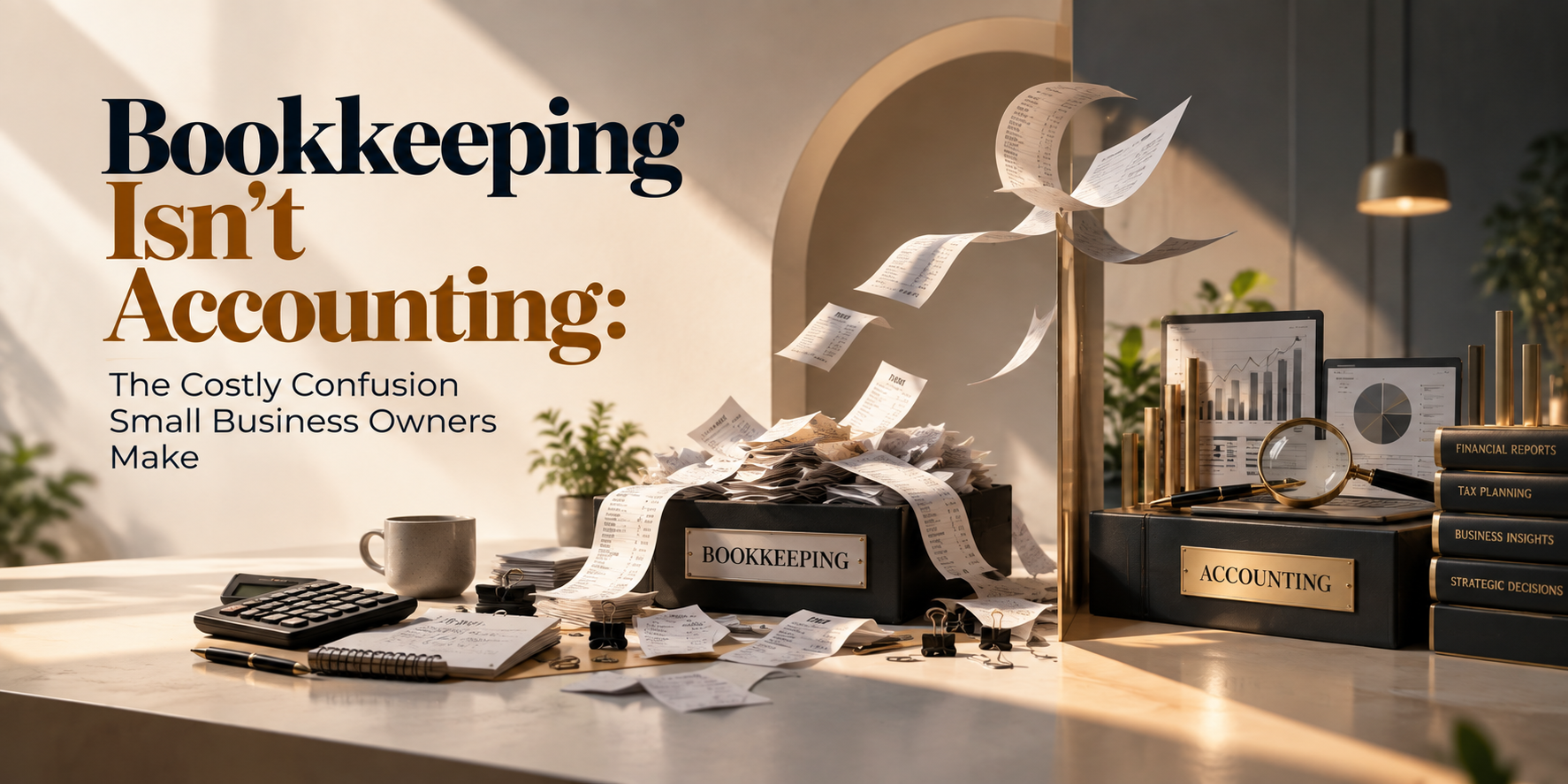
Ask most small business owners who "does their accounts," and the answer usually points to someone who enters sales, purchases, and expenses into a ledger or Tally file. That's bookkeeping — and it's essential. But it is not accounting, and the gap between the two is where a surprising number of businesses run into trouble, often without realising it until a crisis forces the issue.
What Bookkeeping Actually Covers
Bookkeeping is the recording layer: invoices logged, payments entered, bank entries reconciled, GST data captured. It answers the question, "What happened?" It is necessary, but on its own, it is descriptive, not diagnostic. A well-kept ledger tells you exactly what was spent and earned — it doesn't tell you whether those numbers represent a healthy business.
What Accounting Actually Does
Accounting sits a layer above bookkeeping. It interprets the recorded data to answer harder questions:
- Is the business actually profitable, or just cash-flow positive this month?
- Where is working capital getting stuck — in receivables, inventory, or vendor terms?
- What will the tax liability look like before the year closes, not after?
- Is the current structure (proprietorship, LLP, private limited) still the right one for this stage of growth?
- Which product lines or clients are actually generating margin, versus simply generating revenue?
Bookkeeping tells you where the money went. Accounting tells you what to do about it.
Why This Confusion Gets Expensive
Business owners who assume "the books are done" often discover only at year-end that:
- Deductions that required planning months earlier were missed entirely, because no one was reviewing the numbers with a tax-planning lens during the year.
- Cash appeared healthy while profit margins were quietly eroding — a common trap for businesses with long receivable cycles, where cash from old invoices masks the fact that new sales are less profitable than before.
- Compliance was technically met, but no one was watching whether the numbers made strategic sense, meaning growth decisions were made on incomplete information.
A Real-World Pattern
Consider a small trading business turning over ₹2 crore annually with consistent bookkeeping. The ledgers are accurate, GST returns are filed on time, and the books look orderly. Yet the owner is confused about why cash feels tight despite "good sales." A proper accounting review reveals the answer: a handful of large clients are paying 90 days late, and the business is effectively financing its customers' working capital with no compensation for that risk. Bookkeeping recorded this perfectly. It took accounting analysis to notice it was a problem worth solving.
What to Ask Your Finance Team
A useful test: if your current arrangement only ever tells you what already happened, and never flags what's about to happen, you have bookkeeping — not accounting. Growing businesses eventually need both: accurate recording, and someone actively interpreting that record before decisions are made, not after. This doesn't necessarily mean a large finance department — even a quarterly strategic review layered on top of existing bookkeeping can close most of the gap.