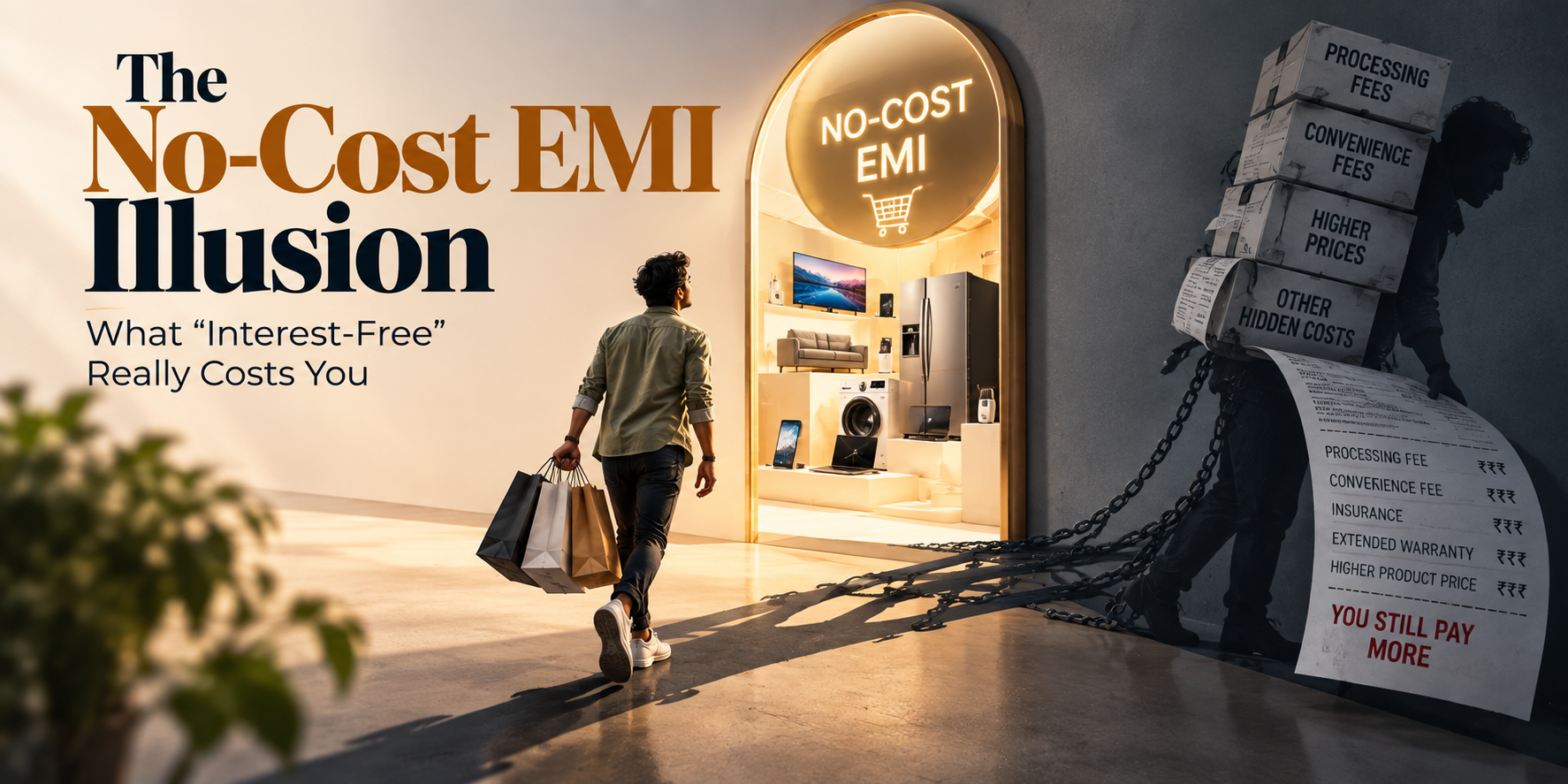
Walk into any electronics store or open any shopping app during festive season, and you'll see it everywhere: "No-Cost EMI." The phrase suggests a rare gift — the convenience of paying later, without paying a single rupee extra for that convenience. In reality, the cost hasn't disappeared. It has simply moved somewhere less visible, and understanding exactly where is the difference between using credit wisely and quietly overpaying for years.
Where the "No Cost" Actually Comes From
In a typical no-cost EMI structure, the interest a bank or NBFC would normally charge is technically waived — but it is usually offset in one of these ways:
- The upfront discount you would have received on paying full cash is quietly removed or reduced. A product listed at ₹50,000 with no-cost EMI might have sold for ₹46,000 in cash — that ₹4,000 gap is the interest, relabelled.
- The seller absorbs the interest cost by adjusting the product's listed price slightly upward before the "discount" is applied, so the final EMI total still matches what a cash-plus-interest purchase would have cost.
- Processing fees are added, which function as interest under a different name — often 1–3% of the purchase value, disclosed only in the fine print.
There is no such thing as free credit. Someone always pays for the cost of money — the only question is whether you can see where.
Why This Matters More Than It Seems
The real issue isn't the few hundred rupees hidden in a processing fee. It's the psychology "no-cost" creates. When credit feels free, people take on more of it, more casually, than they would with a visible interest rate attached. Multiple no-cost EMIs running simultaneously — a phone, a laptop, a mattress, an appliance — can quietly consume a meaningful chunk of monthly take-home pay, long after the festive excitement has faded.
There's also a compounding effect worth noting: each new EMI commitment reduces the monthly surplus available for savings or emergencies. A household juggling four or five "interest-free" EMIs simultaneously has effectively pre-spent several months of future income, even though no single purchase felt like a big financial decision at the time.
A Simple Test Before You Say Yes
- Ask what the cash discount would have been if you paid upfront.
- Compare the EMI total to the cash price, including any processing fee.
- If the numbers match exactly, it's genuinely no-cost. If they don't, you've found where the interest went.
- Check whether the processing fee is refundable on foreclosure — many aren't, which matters if you plan to pay off the EMI early.
When No-Cost EMI Actually Makes Sense
None of this means EMIs are inherently bad. Used deliberately — for a genuinely necessary, planned purchase, where the EMI amount is comfortably within your monthly surplus — they can be a reasonable cash-flow tool. The difference is intent: financing a laptop needed for work, with a clear repayment plan, is very different from financing a fifth gadget purchase this quarter simply because the EMI felt small enough not to notice.
The Better Question to Ask
The real question isn't "is this EMI free?" — it's "should I be financing this purchase at all?" No-cost EMI is at its most dangerous when it makes an unnecessary purchase feel like a responsible one. Used occasionally and deliberately, EMIs can be a smart cash-flow tool. Used as a default way of shopping, they quietly convert wants into recurring monthly obligations — obligations that don't disappear even in a month when income is tight.