
Getting your first job is a major milestone. After years of studying, completing assignments, preparing for interviews and waiting for placement opportunities, receiving your first offer letter can feel like the beginning of financial independence.
Then comes the salary.
For a graduate offered a ₹5 LPA package, the number can look impressive. It is tempting to immediately think about a new smartphone, a bike, a better lifestyle, weekend outings or moving into a more expensive apartment.
But there is a problem that most students are not taught to think about:
Getting your first salary and knowing how to manage your first salary are two very different things.
A good job package does not automatically create financial security. In fact, the first few months of employment can be when young professionals develop financial habits that stay with them for years.
The real question isn't simply “How much do I earn?”
It is:
“How much of what I earn actually improves my financial position?”
Your CTC Is Not Your Take-Home Salary
One of the first financial lessons every fresher should learn is the difference between CTC and take-home pay.
If an offer letter says ₹5 lakh per annum CTC, it does not necessarily mean ₹5 lakh will reach your bank account during the year.
Your compensation structure may include different components, such as:
- Basic salary
- Allowances
- Employer contributions
- Variable pay
- Bonuses
- Other benefits
- Applicable deductions
After applicable deductions, the amount credited to your account can be different from the headline CTC.
That's why your first financial calculation should not be:
“I have a ₹5 LPA job, so what can I buy?”
It should be:
“What is my actual monthly take-home pay, and what does my monthly financial life look like?”
Understanding your payslip is not a boring administrative exercise. It is one of the first steps toward becoming financially independent.
The First Salary Can Create the First Lifestyle Trap
For many young professionals, the first salary represents freedom.
You can finally spend your own money. You may want to celebrate. You should.
The problem begins when one-time celebration becomes a permanent lifestyle upgrade.
A new phone becomes an EMI. The EMI is followed by a credit card. The credit card is followed by subscriptions, food delivery, shopping and frequent outings. Then perhaps comes a vehicle loan.
None of these decisions may seem significant individually. Together, they can create a large amount of fixed monthly expenditure.
And fixed expenses matter because they don't disappear simply because your income becomes temporarily uncertain.
Can I Buy It vs. Can I Afford It?
There is an important difference between these two questions:
“Can I buy this?”
and:
“Can I comfortably afford this?”
That difference can define your financial life during the first few years of employment.
The Credit Card Isn't Free Money
A credit card can be a useful financial tool when used responsibly. But for someone receiving their first salary, it can also create a dangerous psychological shift:
You receive the product today and worry about the money later.
That becomes particularly risky when the card is used to fund a lifestyle that your monthly income cannot comfortably support.
The danger is not necessarily buying one expensive item. It is repeatedly telling yourself, “I'll manage it next month.”
Eventually, several “next months” arrive together.
Young professionals should understand concepts such as:
- Credit limits
- Interest charges
- Minimum payments
- Late-payment consequences
- Credit utilisation
- Instalment plans
- The difference between convenience and affordability
A simple question can help before using credit:
If my salary stopped for three months, could I still pay this bill?
Credit should support responsible spending—not disguise unaffordable spending.
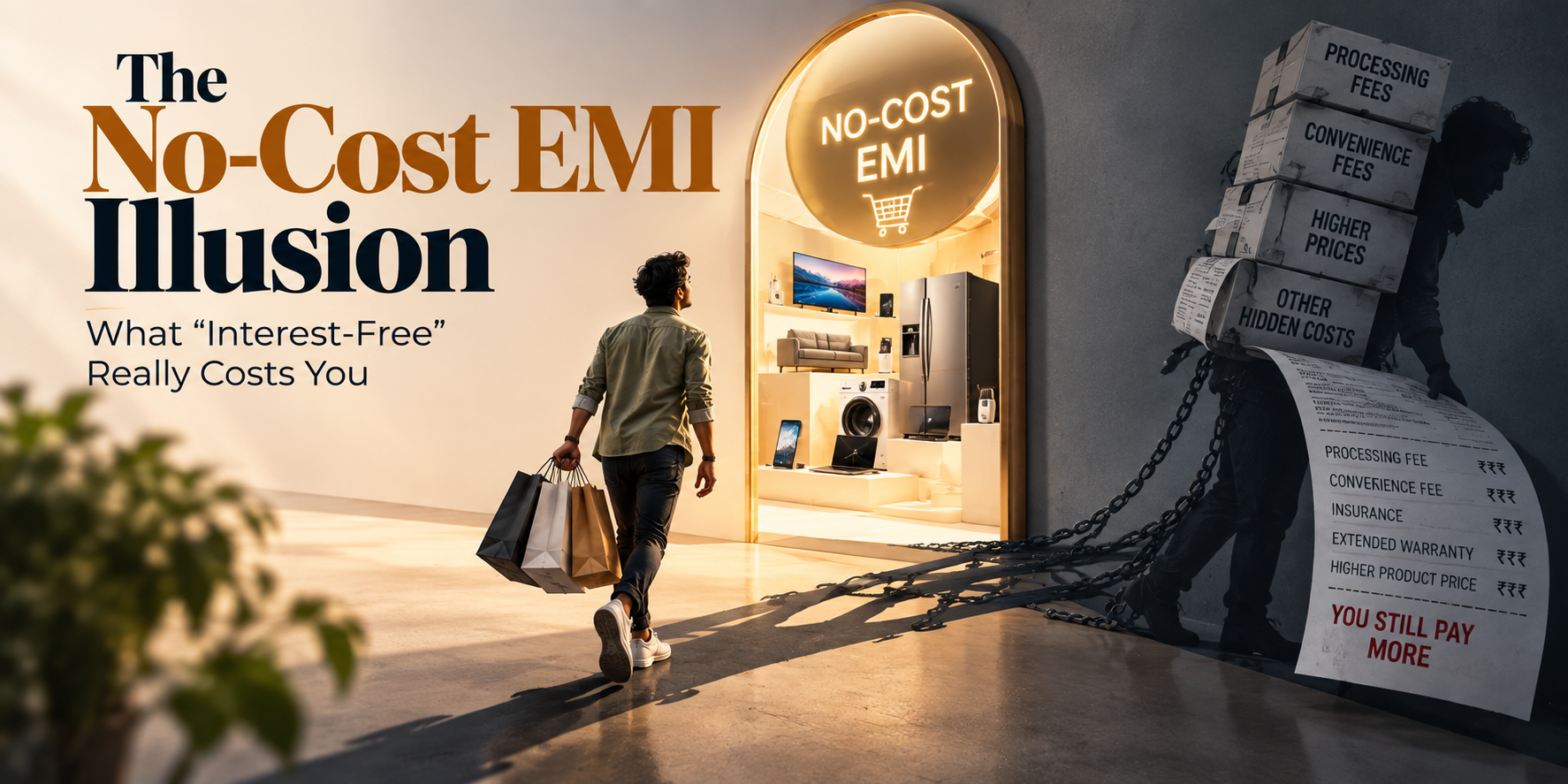
The EMI Trap: When Tomorrow's Salary Is Already Spent
EMIs can make expensive purchases appear affordable.
A ₹60,000 purchase may sound difficult. But “only ₹5,000 per month” can sound much easier.
This is where the psychology of instalments can become misleading.
You aren't necessarily making the purchase cheaper. You are committing part of your future income today.
One EMI may be manageable. But consider a hypothetical young professional with:
- Phone EMI
- Vehicle EMI
- Personal loan
- Credit-card instalment
- Multiple subscriptions
Suddenly, a significant portion of every month's salary is already committed before the person decides what to do with it.
The issue isn't that all EMIs are bad. The issue is taking on monthly obligations without considering their total effect on your financial flexibility.
The Emergency Fund Nobody Explained in College
Students spend years preparing for examinations and job interviews. But what happens after the job?
What happens if you lose your job? What if your employer restructures? What if a family emergency occurs? What if you face an unexpected expense or need to relocate?
This is where an emergency fund becomes important.
An emergency fund is money set aside for genuine financial emergencies rather than everyday spending.
For a new employee, building this reserve may not feel exciting. It doesn't give you a new phone or a holiday.
But it gives you something much more valuable:
Financial breathing room.
Without savings, an unexpected expense can immediately become a credit-card bill or loan. With savings, the same problem may be something you can handle without taking on unnecessary debt.
Don't Confuse a Higher Salary With Financial Progress
Suppose someone starts at ₹5 LPA. A few years later, their salary becomes ₹8 LPA.
That's progress.
But what if their expenses increased almost exactly alongside their income?
- Rent increased
- Vehicle expenses increased
- Shopping increased
- Dining expenses increased
- Subscriptions increased
- Credit-card spending increased
The salary is higher. But financial security hasn't necessarily improved.
This is commonly described as lifestyle inflation.
It happens gradually. You earn more, so you spend more. Then you earn more again, so you spend more again.
Eventually, someone with a higher salary can still feel financially stressed.
Real financial progress should ideally include more than income growth.
Income growth + savings growth + skills growth + financial security
Your First Salary Should Not Become Your First Financial Mistake
There is nothing wrong with enjoying your first salary.
Buy something you've wanted. Take your family out. Celebrate with your friends. Travel if you can afford it.
The goal isn't to turn your first salary into a strict austerity exercise.
The goal is to create balance.
A simple approach is to think about your income in different categories:
1. Essentials
The expenses you need to live and work.
2. Savings
Money that strengthens your financial position.
3. Future Goals
Education, major purchases, long-term plans and other priorities.
4. Protection
Appropriate insurance and an emergency reserve.
5. Lifestyle
Entertainment, travel, shopping and things you genuinely enjoy.
The exact percentages will differ from person to person. There is no universal formula that works for every salary, city or family situation.
What matters is having a system before your spending becomes automatic.
A First-Salary Checklist for Fresh Graduates
Before making major financial commitments, ask yourself:
- Do I know my actual take-home salary?
- Do I understand my salary structure?
- Do I know which deductions apply to me?
- What are my essential monthly expenses?
- How much do I spend on discretionary purchases?
- Do I have accessible emergency savings?
- Do I understand my insurance needs?
- Can I comfortably manage a new EMI?
- Can I pay my credit-card bill in full?
- What are my short-term and long-term financial goals?
- Am I building savings as my income grows?
- Am I developing skills that can increase my future earning potential?
The First Salary Is Also an Education
This is where education, placement and finance come together.
A student can spend years learning technical subjects, earning a degree and preparing for interviews.
Then they get a job.
But the education doesn't stop when the placement letter arrives.
The first salary creates a new learning environment.
You have to learn:
- How employment compensation works
- How to read a payslip
- How taxes affect income
- How credit works
- How debt affects cash flow
- How to build financial reserves
- How to distinguish needs from wants
- How to plan for the future
Getting the job is one milestone. Learning how to build a stable life from that income is another.
Don't Spend Your Future Salary Before You Earn It
This may be the most important lesson for a first-time employee.
Your future salary belongs to your future self.
Every unnecessary EMI, unpaid credit-card balance or excessive monthly commitment reduces the choices available to you later.
And financial freedom isn't simply about being able to buy more.
It is about having more choices.
- The ability to leave a job that isn't right for you
- The ability to pursue further education
- The ability to handle an unexpected emergency
- The ability to support your family
- The ability to change careers
- The ability to take a calculated professional risk
- The ability to say no to financial pressure
Those choices become easier when your monthly income isn't already committed to yesterday's purchases.
Your First Salary Should Buy You Options, Not Just Things
Your first salary deserves to be celebrated.
But it also deserves to be respected.
The objective isn't to avoid spending. It is to avoid building a lifestyle that requires every future salary to maintain it.
A good first job gives you income.
Good financial habits turn that income into security.
And over time, that security can give you something that a large CTC number alone cannot:
Freedom to make better choices.
Your first salary is not just money in your bank account. It is the beginning of your financial habits.
Make sure those habits are working for your future—not against it.